Crazy Party Font for Web Design
It was a quiet afternoon when I first tested Crazy Party on a client’s boutique website. The goal was simple: to give their hero section a playful yet professional feel that matched their brand identity. As I imported the font into my design tool, I couldn’t help but smile at how its quirky handmade charm immediately stood out. Crazy Party isn’t just a display font—it’s a visual statement.
A Playful Typeface with Personality
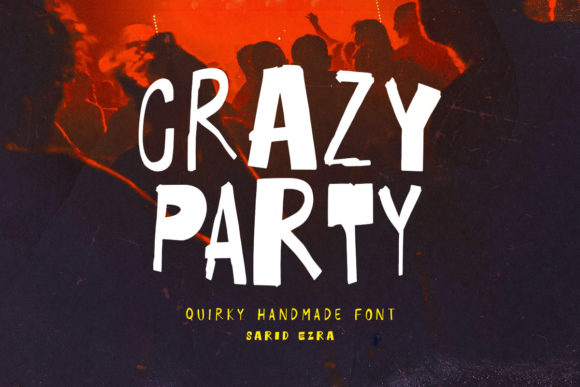
Crazy Party is a display font that brings a sense of whimsy and creativity to any digital project. Its unique lowercase and uppercase letters have very different weights, giving it an organic, handcrafted look. This makes it perfect for adding personality to headers, banners, and other eye-catching elements without sacrificing readability in larger sizes.
The font has a distinct visual character that feels both modern and nostalgic. It works well for brands looking to stand out while maintaining a friendly and approachable vibe. Whether you're designing a creative portfolio or an online store, Crazy Party adds a layer of visual interest that can elevate your web design.
Testing Crazy Party in Real Web Layouts
I started by applying Crazy Party to the hero section of the boutique site. The headline read “Welcome to Our World,” and the font gave it a fun, inviting feel. It paired beautifully with a clean sans serif font for body copy, creating a balanced contrast that guided the user’s eye naturally from the headline to the content below.
Next, I used Crazy Party for a call-to-action button labeled “Shop Now.” The boldness of the font made the button pop against a light background, encouraging clicks without overwhelming the layout. I also experimented with using it in a blog header, where it added a touch of playfulness to a more serious editorial piece.
On mobile, the font scaled well and remained legible even at smaller sizes. I noticed that it performed best when used for short phrases rather than long paragraphs. For longer text, I opted for a simpler sans serif font to ensure readability across all devices.
Where Crazy Party Shines Online
Crazy Party is ideal for use in website headers, hero sections, landing pages, and promotional banners. It works especially well for creative businesses such as boutique stores, coaching websites, and course sales pages. Its decorative style adds visual flair to digital ads, campaign pages, and branded content without compromising professionalism.
One of the most effective uses I found was in a product landing page for handmade jewelry. The headline “Handcrafted with Love” in Crazy Party immediately captured attention and set the tone for the rest of the page. It also looked great in a dark mode layout, where the font’s contrast against a deep background made it stand out.
For branding purposes, Crazy Party can be used in logo designs or as part of a digital brand kit. It adds a unique touch that helps establish a memorable visual identity. However, it's important to pair it with a complementary font for body text to maintain readability and balance.
Readability Tips and Best Practices
While Crazy Party is a fantastic display font, it’s not suitable for every web element. It performs best in larger sizes and for short phrases. Avoid using it for small navigation text, form labels, or dense blocks of content where readability is crucial.
To ensure optimal performance, always check if the font supports webfont formats and includes necessary styles like bold, italic, and alternate characters. Also, verify that it offers multilingual support if your audience speaks multiple languages.
When pairing Crazy Party with other fonts, consider using a clean sans serif font like Helvetica or Arial for body text. This combination provides a good balance between decorative and functional typography. For a more elegant look, try pairing it with a simple serif font like Georgia.
Lastly, always review the commercial font licensing before using Crazy Party on client projects, online stores, or digital templates. Ensuring proper licensing will protect both your work and your clients’ rights.